Friday, May 31, 2013

Ways to Prevent or Decrease Cyber Bullying


Hey guys, Xavier here again... 
With technology on the rise, bullying has become much easier not only to participate in, but also to stop or intervene. As with technology, social networking websites have grown over the past few years. Thanks to Facebook, Twitter, and YouTube, social networking websites allow us to reveal personal information, as well as beliefs and pictures that can be viewed by both friends and people we do not know. These different networks allow the possibility of cyber bullying to occur much more frequently. 
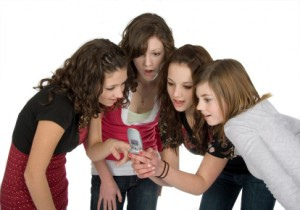
Cyber bullying is a huge issue right now because of all the technological resources and the social networking websites we have available, both at home and at school. Cyber bullying occurs when a child is tormented, threatened, harassed, humiliated, embarrassed, or otherwise targeted by another child using the Internet, interactive and/or digital technology, or mobile phone. Some forms of cyber bullying can include e-mail, instant messaging, chat rooms/ bash boards, and text messages. These forms of cyber bullying mentioned above can also happen when kids are alone, and may cause emotional distress when an adult is not around to talk to about it. Below is an example of a typical cyber bullying situation:
Amy was at home on Saturday night with her friend Angela, who came over to watch a movie. When Angela arrived, Amy changed her Facebook status to say: “Watching a movie with my girlfriend.” Erica (Amy and Angela’s) classmate got online and immediately commented on the status, calling Amy a “lesbo.” Erica then proceeded to text her boyfriend and other classmates, letting them know that Amy and Angela were “gay” and dating each other. At school on Monday, everyone was pointing at the two of them and whispering behind their backs. When she got home, Amy had six new posts on her Facebook wall calling her “gay,” a “lesbian,” and other derogatory comments about her sexuality. Her mother called the school to report the incident so the administrators would be aware of what was going on in case it continued. 
Ways to prevent or decrease cyber bullying:
·      Place / keep computer(s) with Internet access in an open, commonly used space.
·      Never give out personal information or passwords, P.I.N. numbers etc. Personal information includes your name, the names of friends or family, your address, phone number, school name. Personal information also includes pictures of yourself and your e-mail address, even when registering a product purchased for your computer (like a game). Passwords are secrets, you should never tell anyone your password except your parents or guardian.
·      Don't believe everything you see or read on the Internet. Just because someone online tells you that they are fifteen doesn't mean they are telling the truth. Even adults can't always tell when a someone pretends to be another person or if a 50 year-old pretends to be a 15 year-old.
·      Use manners. Be polite to others online just as you would off-line. If someone treats you rudely or meanly - do not respond. Online bullies are just like off-line ones – they want to see a reaction (don't give them the satisfaction).
·      Don't send a message to someone else when you are angry. Wait until you have calmed down and had time to think. Do your best to make sure that your messages are calmly and factually written. We say a lot of things when we are angry that we don’t mean or later on regret. It is hard to undo damage that an angry message can cause.
·      Don't open a message from someone you don't know. If in doubt, ask some such as your parents, guardian, or another adult.
·      If it doesn't look or feel right, it probably isn't. Trust your instincts. We often can tell if something is off, so it is important to listen to your instinct and not ignore those feelings. While surfing the Internet, if you find something you don't like and it makes you feel uncomfortable or scares you, turn off the computer and tell an adult.
·      You don't have to be “Always Online.” Turn off, disconnect, unplug, and try actual reality instead of virtual reality. Give yourself a break. Spend time with your family and friends off line, it is often more fun anyway. 

Note: the above statements were referenced from Cyberbullying.org

For more information on Acception’s solution-based approach to bullying prevention in the classroom, visit www.Acception.info

Tuesday, April 30, 2013

Day of Silence vs. Day of Dialogue: Is This Really Helping?

Hey guys, Xavier here again...

On April 19, some LGBT students at my school observed the Day of Silence, where gay and lesbian teenagers refuse to speak the entire day to protest the bullying of sexual minority youth. The day before, some religious kids also took part in a similar day called the Day of Dialogue. This day was a bit different, and encouraged students of faith to talk to their LGBT classmates about their views of sexuality and what their faith has to say about it.

Honestly, it was all a bit confusing to me. Everyone seemed to have their own agenda for these days, and none of the students really talked about bullying (especially on the Day of Silence, for obvious reasons). During the Day of Dialogue, one gay student got really upset because a religious student said that "homosexuality is wrong" and that "people aren't born that way." Then, on the Day of Silence, several religious students stayed home to protest, while a few others actually walked out of a school assembly at the end of day.

The assembly, which was supposed to be about bullying prevention, focused more on understanding sexuality and sexual-minority youth, and offended some of the religious students who don't think that being gay is right. They also claimed that the assembly focused too much on sexuality and not enough on bullying, and that many kids are bullied, not just gay and lesbian students. I guess they have a point.

After going through all the drama at school these two days, I am convinced that bullying needs to be a discussion that happens throughout the school year, not just on certain days, for certain kids. A couple of times a year, we have an assembly where a speaker talks about bullying and how bad it is, but the students don't seem to learn how to really stop it. So, if any principals are reading this, make sure to educate students ALL YEAR on bullying, not just one or two days. It doesn't work. In fact, it might cause more harm than good.

For more information on Acception’s solution-based approach to bullying prevention in the classroom, visit www.Acception.info 

Thursday, March 28, 2013

What to do when you are sexually harrassed...

Hey guys, Xavier here again...

Today's bullying post is going to be a very sensitive and serious subject: Sexual harassment. Intimidating another student due to his/her sexual orientation, whether perceived or real, is a form of bullying. It's also bullying when someone enters another student's personal space and violates them in a sexual way. What makes this even more complicated is that it's not just physical, it can be emotional or psychological as well. For example, a football player that constantly says provocative phrases to a cheerleader, can be sexual harassment, if those advances are not welcome. Another example of sexual intimidation can be found in the Acception: Bullying Solutions and Prevention Health Education Curriculum. Take a look below:

Alex’s family recently moved into a very conservative school district with little diversity. He is the only openly gay student in his school and feels like an outsider because of his sexual orientation. One day he is walking down the school hallway when a couple of bullies call him a “fag” and yell at him to “stop acting like a girl” as many of the students laugh. This harassment begins to happen more frequently, and Alex finds himself being singled out because of his sexual identity on a regular basis. How do you speak up to the bullies?

 
A couple of ways you can speak up to the bullies may be:
1. Confront the bullies and ask them, “Why are you doing this?” Try to find out why they are prejudiced against gays, and explain to them that bullying a student because you don’t understand or agree with his or her sexuality isn’t cool. 
2. Offer to walk down the school hall with Alex in between classes and get some of your friends
to join you. There is strength in numbers! If the bullies keep harassing Alex, tell them they are rude and to “Stop It!”  

Remember, there is strength in numbers, so don't try to confront bullies on your own, and don't be afraid to get the assistance of a teacher, an administrator, or another adult to help you!

For more information on Acception’s solution-based approach to bullying prevention in the classroom, visit www.Acception.info

Friday, March 1, 2013

Spreading Lise or False Rumors

Hey guys, Xavier here again...

It's the winter, and it's cold outside! Recently, I was attending our high school's basketball game on Friday night when I got a text message from a friend. It turns out, there was a rumor going around about two girls in our class. Well, before I tell you more, read about it below and let me know what you think. Is this is bullying?


During the Friday night basketball game, Aisha and Nicole walk into the gym- nasium holding hands. Neither of the girls are lesbians, just close friends who are affection- ate with each other. While they are walking in, Amy, who doesn’t like Aisha, sends a text message to one of her friend’s cell phone: “Aisha’s a lesbo...look, she’s holding hands with her girlfriend!” The text message is then forwarded to several dozen students in the stands, who laugh and point at both of them throughout the game. When Aisha finds out, she is so embarrassed that she and Nicole leave the game early. The following Monday morning, Aisha finds several sexually derogatory comments posted on her locker. 
  
If you said "yes" you are right. Spreading list or false rumors is another form of bullying, and it hurts. The fact that it was done repeatedly, over the course of a few days, is an indication that it crosses the line from teasing into bullying. Additionally, there is sexual harrassment and verbal bullying going on here too, because of the name-calling and targeting of the girls due to their perceived sexual orientation. 

For more information on Acception’s solution-based approach to bullying prevention in the classroom, visit www.Acception.info
Tuesday, January 29, 2013

Bullying through intimidation

Hey guys, Xavier here again...

It's a new year, but bullying is still a huge problem in my school. Yesterday, I heard about a student who was singled out because he is gay. Another form of bullying is intimidating or singling out an individual or group due to racial, ethnic, religious, sexual orientation, or other differences. 

To give you an example of what could happen when someone is bullied this way, let's take look in the Acception: Prevention and Solutions Health Education Curriculum.


Alex’s family recently moved into a very conservative school district with little diversity. He is the only openly gay student in his school and feels like an outsider because of his sexual orientation. One day he is walking down the school hallway when a couple of bullies call him a “fag” and yell at him to “stop acting like a girl” as many of the students laugh. This harassment begins to happen more frequently, and Alex finds himself being singled out because of his sexual identity on a regular basis. 

How would you speak up to these bullies? A couple of ways you can speak up to the bullies may be: 
 
1) Confront the bullies and ask them, “Why are you doing this?” Try to find out why they are prejudiced against gays, and explain to them that bullying a student because you don’t understand or agree with his or her sexuality isn’t cool. 
2) Offer to walk down the school hall with Alex in between classes and get some of your friendsto join you. There is strength in numbers! If the bullies keep harassing Alex, tell them they are rude and to “Stop It!"

Remember, there is strength in numbers! If you find yourself being harassed or singled out in this way, make sure to tell someone, such as a friend, a teacher, or your parents. No one should have to be bullied simply for who they are!

For more information on Acception’s solution-based approach to bullying prevention in the classroom, visit www.Acception.info

Wednesday, December 19, 2012

Bullying Doesn't Stop During the Holidays

Hey guys, December has been a very busy time for me with the holidays approaching and all, so I'm only going to write one blog this month. 

The issue I'm writing about is an important one, because everyone needs to feel love and accepted by family and friends, especially this time of the year. Unfortunately, "hurting people, hurt people" all the time, and bullying doesn't stop during the holidays. In fact, the holiday season can be an even more lonely time for those who experience social exclusion. 

During the time off of school, friends often get together to shop, see movies, go ice skating, and celebrate together. But when cliques exclude other classmates on purpose in the effort to hurt them, feeling left out can turn into bullying behaviors. Let's look at one example from the Acception: Bullying Prevention and Solutions Health Education Curriculum, to help us understand how social exclusion occurs in schools.


Lisa desperately wants to fit in with the popular cheerleading girls. However, she’s overweight and doesn’t dress very trendy. A few of the cheerleaders sarcastically encourage her to try out for the cheerleading squad, not intending to even consider her. Lisa reluctantly agrees, in the hopes of being accepted. After the tryouts, the cheerleading captains tell Lisa that she will be accepted on the squad only if she steals lunch money from the underclassman for the next month and gives it to the captains. Lisa feels very uncomfortable but is desperate to be accepted, so she agrees. After one month, the captains tell her she was stupid to believe they would allow a “fat thief” on their squad and all laugh at her in front of the entire cheerleading squad. 

Lisa was forced to do things in order to be accepted (a form of bullying), and in the end, was still excluded by the cheerleaders. Can you imagine how humiliated she must have felt? Whether you are a teacher, student, or administrator reading this, make an effort to reach out to someone this season and show them love. Remember, when we accept and appreciate the differences of others, we bring some much needed love into a hurting world. 


For more information on Acception’s solution-based approach to bullying prevention in the classroom, visit www.Acception.info

Friday, November 30, 2012

Getting the Cold Shoulder

  Hey guys, Xavier here again…
 
So far we have talked about physical bullying and verbal bullying and how damaging they can be. Now we are moving to another form of bullying, social exclusion and isolation.   
Everyone likes to have friends and wants to feel like they belong, but sometimes this create cliques. Cliques are made up of individuals who share similar interests and then exclude others that think, act, or look differently. This type of bullying can affect multiple groups; LGBT students, racial minority students, religious minority students, disabled students, overweight students, etc. 

According to an article by Dr. Rick Nauert on psychcentral.com many times kids who are being excluded or ignored can develop physical symptoms such as mood disorders (depression) which actually leave them feeling cold (it gives a whole new meaning to the saying “giving you the cold shoulder”). It is important to remember that we have the power in us to stop this. By just saying "hi" to someone or including them in a group activity, you can really help someone feel like they belong. 

If all else fails, remember the Golden Rule: "Do unto others as you would have them do unto you."
For more information on Acception’s solution-based approach to bullying prevention in the classroom, visit www.Acception.info

Sunday, November 18, 2012

Take your power back!


Hey guys, Xavier here again…

Verbal abuse, as we learned in the last issue, is one of the most subtle yet destructive forms of bullying (predominately used by girls) because it leaves emotional wounds and scars for many years. However, if you are a victim of verbal bullying there are things you can do to overcome this. First and foremost please remember that the person who is bullying you is probably doing it because they are hurting (Hurting People Hurt People).

Our society is so addicted to physical beauty that young girls are constantly comparing themselves to unrealistic, unattainable images which often lead to low self-esteem (low self-worth is one of several different pathways that contribute to bullying). So when you understand where the bully is coming from you will be in a better position to take your power back.

According to the article How to deal with bullying, there are ten different ways you can do this:

·         Avoid the bully at all costs

·         Ignore the bully

·         Know that verbal bullies often have their friends join in the "fun"

·         Tell a teacher, trusted adult, or parent if the bullying is consistent

·         Remain civil, no matter what

·         Don't Listen to the rumors the bully says about you

·         Walk away if the bully is actually insulting you to your face, as this makes them look weak

·         Tell someone how you feel; if you don't have a close friend, talk to your school's guidance counselor

·         If the bullying continues, tell your principal to have a talk with him/her

·         After that and when you see him or her come, why not act nice as a start to them?

Remember, you don’t have to take all ten suggestions, just choose the ones that work for you and remember that the worst thing you can do is to keep everything bottled up inside!

For more information on Acception’s solution-based approach to bullying prevention in the classroom, visit www.Acception.info

Thursday, November 1, 2012

Sticks and Stones May Break My Bones, But Names Will Never Hurt Me


Hey guys, Xavier here again…

In the past two blogs I’ve discussed physical bullying; what it is, how to identify it, and who it targets. This month I’m going to move on to a more subtle, but equally damaging form of bullying: Verbal Bullying. According to Bullying Statistics verbal bullying (also known as verbal abuse) is more common among girls because it gives them a way to dominate others by showing their superiority and power. In the Acception film, we are introduced to Tanya. Unfortunately, students in her school didn’t like that was she was a lesbian, and made her feel ashamed and inadequate, as if there were something wrong with her. But you would never know because she kept her feelings to herself. That’s the most devastating aspect about verbal bullying; you can’t always see how damaging the effects really are, because the pain is on the inside. The old nursery rhyme, “sticks and stones may break my bones, but names will never hurt me” is one of the biggest lies that exist, because hurtful words can create lifetime scars that may actually lead to someone taking their own life! Remember, we have the power to stop bullying by standing up for someone who is getting put down when we see it happening. We can also show love to the bullies by helping them understand that putting others down to make themselves feel better doesn’t work.

For more information on Acception’s solution-based approach to bullying prevention in the classroom, visit www.Acception.info

Friday, October 19, 2012

Be a hero, stop a bully! Be a hero, love a bully!


Hey guys, Xavier here again…
Last time I talked about what to look for when someone is being physically bullied and how this tends to be more common with guys than girls. 
Today I want to take a more in-depth look at what type of student a bully usually targets, and why this occurs. In order to do this, let’s take a look at Mike’s story from the Acception film. 
Mike is one of the older and bigger students in his school, which gives him an advantage when it comes to physical strength. Combine this with the fact that he comes from a badly functioning family and is being physically abused at home, and this explains perfectly why Mike is picking on others. It’s the concept of “hurting people, hurt people.”
When someone has done something negative to you, it can affect the way you see yourself, and if you don’t deal with it, a deep wound develops inside of you. You can either get help by talking about it with a friend, teacher, or counselor, or keep it hidden inside. In Mike’s case, he didn’t talk about it or get help from anyone, and ended up taking his frustration out on other students so that he could feel better about himself. 

By the end of Acception, Mike starts to figure out why he bullies others, and we see a change in him. I think if all the bullies out there were able to recognize what’s going on inside of them, this problem wouldn’t be so bad. 

By the way, there are things you can do to help: “Be a hero, stop a bully! Be a hero, love a bully!” Talk with your teacher or another trusted adult if you see something like this happening and maybe together, you can help a bully and stop a bully from hurting others, all at the same time!
For more information on Acception’s solution-based approach to bullying prevention in the classroom, visit www.Acception.info

Wednesday, October 3, 2012

Physical bullying hurts boys more than girls...

Hey guys, Xavier here again...

I've decided it would probably be a good idea to take a deeper look at each form of bullying so we are better prepared to deal with it when it happens at school. Today I'm going to talk about physical bullying. 


According to an article on Bullying Statistics, physical bullying can come in many different forms, including:

  • Hitting
  • Pushing
  • Tripping
  • Slapping
  • Spitting
  • Stealing or destroying possessions, including books, clothing, or lunch money
There are some common signs you can look for to determine whether one of your classmates is the victim of physical bullying. Some obvious ones include leaving school with bruises and cuts or having clothes or books damaged.

There are also some less obvious indicators that one of your friends might be in trouble, such as skipping certain classes or avoiding certain people. For example, in the film Acception, Thomas often left his previous class (before Phys Ed) early so he wouldn't have to change in front of the other guys. He was so embarrassed that his body didn't measure up to the football guys - I'm sure many of us can relate to that! You can watch his story of physical bullying on YouTube by clicking here.


One other thing we need to remember about physical bullying is that guys are more likely to be bullied in this way than girls. So if you see a classmate being shoved against a locker or tripped in the hallway, "Be a Hero and Stop a Bully"...you could save a life!


 For more information on Acception’s solution-based approach to bullying prevention in the classroom, visit www.Acception.info

Thursday, September 20, 2012

Bullying takes many forms...


Hey guys, Xavier here again…
The new school year is a really exciting time to reunite with friends after the long summer break, but it can also be a time of anxiety for students who are bullied. But there is hope! In our hands, we have the power to prevent and stop bullying, and this starts with accepting and appreciating differences.
When we learn to embrace that we’re all different we can begin to understand that bullying often occurs because we’re just afraid of each other. Just like our many differences, bullying takes many forms. According to a recent article from Bullying Education about half of all students experience some kind of bullying. When I first read that number, I was really shocked, but then I realized that bullying occurs in many forms, and can include:
·      Physical bullying (such as fighting)
·      Verbal bullying (repeated name calling)
·      Bullying through social exclusion or isolating
·      Intimidating or singling out an individual or group due to race, ethnic, religious,        sexual orientation, or other differences
·      Spreading lies or false rumors
·      Sexual harassment and/or intimidation
·      Being threatened or forced to do things by students who bully
·      Cyber bullying (through cell phones or the internet)
·      Having possession or money damaged or taken from students who bully 
Let's get one thing straight: bullying is NOT a rite of passage that students must endure in order to become adults. It’s an epidemic in schools across the country and causes a great deal of distress for victims. The effects of bullying range from anxiety and depression, to thoughts of suicide and in some cases, can even lead some students to take their own lives. No one should have to worry about their own safety when they’re trying to learn. Join me and together let’s “Be a Hero” and put an end to bullying!
For more information on Acception’s solution-based approach to bullying prevention in the classroom, visit www.Acception.info

Thursday, February 16, 2012

We are all free: Accept and appreciate differences

Hey guys, Xavier here again...

We wanted to update you on some of the information Mike and Michelle learned about Lesbian, Gay, Bisexual, and Transgender issues, or LGBT for short.

We found out that 8 in 10 LGBT persons have been verbally harassed at school! We also found out that even if others just think you are LGBT, or even if you hang out with someone who is LGBT, you may be teased. That's messed up ain't it?

We watched a video a guy who got bullied in a locker room just because he looked different than the other macho football guys. His body wasn't as buff as the others, so they burst into his bathroom stall and humiliated him by tearing his clothes, recording him naked on their cell phone, and then posting it on the internet! He was so devastated that he had to switch schools! Turns out, cyber bullying can be just as bad, if not worse, then physical bullying!

Mike and Michelle also watched a few videos of gays and lesbians who were bullied and really had a hart time coming to accept themselves for who they are. Two of them decided they were gay, and came out of the closet to their family and friends. Another girl had homosexual feelings, but she didn't really want to be gay. She was confused about her sexuality, and ended up getting support from her friends and family, and somehow managed to resolve her homosexual feelings and marry a guy.

Then, Mike, Michelle, and Nicole were all shocked when I told them about a cousin of mine who was once a lesbian, and was unhappy about her sexual feelings for women and went to therapy for a while to sort things out. She ended up getting married to a man, just like the girl in the video we saw. We're not sure how all this happened, because we thought people were born gay. So Mike and Michelle showed us a cartoon that pointed us to the American Psychological Association for more answers on homosexuality.

It turns out, some live a gay life, some seek another alternative. We are all free. Accept and appreciate differences.

~Xavier

Btw...if you want to find out more on what the American Psychological Association says about LGBT issues, see: http://www.apa.org/topics/sorientation.html

Bullying Solution: Be a Hero!

Many bullies were hurt first; that’s why they bully others.
Families, schools, and the culture too may influence bullying.

We learn by imitation: Monkey see, monkey do!
But, let’s face it—we’re all different too!

Remember the Golden Rule: Do unto others as you would have them do unto you.

Hurting people…hurt people. Healthy people…help people.
If you don’t understand someone, get to know them.
Accept and appreciate differences.

Be a hero! Stop a bully.
Be a hero! Love a bully.

Join us and Be a Hero, and save a life today!

Thursday, September 1, 2011

Hurting people…hurt people!

Hey guys, this is Xavier! Today Nicole and I learned a great lesson on why people bully, based off a cartoon we watched...

Bullying has occurred for thousands of years, dating back to the times of primitive cavemen. First cavemen fought the beasts. But when they learned to rule the animals, they became territorial and turned on each other. They became prejudiced, and began to attack each other based on their unique differences.

One of the reasons prejudice forms is because all humans have a built-in preservation instinct called the "Fight or Flight" response, also known as "Survival of the Fittest." This is located in the Reptilian part of our brain, which has a natural fear response to things we don’t understand, or for the purposes of self-preservation.

It's easier to fear others' differences and attack them, rather than get to know them and understand. This is reinforced by important people in our lives, such as family and friends, who we imitate. If we see these important people discriminate or judge others based on differences, we tend follow them and do the same thing: Monkey see, monkey do!

However, if we take some time and learn to understand why others are different than we are, we can incorporate this knowledge into our Cerebral Cortex, which is the reasoning center, or our "new brain" that that allows us to create more rational responses to things we do not understand and make better choices.

To summarize, we learned that hurting people...hurt people, and healthy people...help people! Just like the compassionate cave kid, who took some time to understand the rejected cave kid, you too can get to know other classmates who are different than you, and chances are, you'll find out that while they may look different on the outside, they are great people on the inside! You can accept and appreciate differences, and choose to be a hero and stop bullying!

By the way, we also learned there are many causes of bullying, such as:

1) Uncaring and badly functioning family;
2) Cultural promotion of violence;
3) Experience of being rejected, low self-worth;
4) Poor academic standards;
5) Recognition/reward for negative behaviors;
6) Aggressive personality
7) Prejudice against minorities;
8) Low standards at home/social environment

Finally, as Nicole said, just remember that if you don't understand someone, get to know them and follow the Golden Rule: Do unto others as you would have them do unto you!

~ Xavier